8 years building software. More than a decade running businesses. Now I build the AI workers that make both of those things irrelevant. If your company still runs on humans for things machines do better, we should probably talk.
What nobody else will tell you
Most AI companies sell you a chatbot and call it a revolution. Most web agencies sell you a template and call it custom. Most data consultants sell you a dashboard and call it intelligence.
None of them build the thing properly. They sell you the illusion of automation and then charge you monthly to keep a human operating it behind the scenes. You're basically paying for a ventriloquist act.
We build complete systems. The website that runs its own marketing. The company that runs its own operations. The data pipeline that runs its own analysis. Three products. One idea: stop paying humans to do things machines do better.
Three things I build
01
Your website launched and immediately started collecting dust. Mine writes its own blog posts, ranks itself on Google, posts to social media, captures leads, and sends follow ups. All while you sleep. Or golf. Or do whatever it is you do when nobody's watching.
Replaces: content writer + SEO + social media manager + lead gen
02
A full company org chart where every role is an AI agent. CEO, department heads, workers. They have budgets, approval chains, and performance reviews. The only thing they don't have is opinions about the office thermostat.
Replaces: 4 to 12 full time employees
03
You're sitting on a goldmine of data and treating it like a filing cabinet. I build systems that scrape it, process it, enrich it with AI, and serve it up in dashboards so clean they make PowerBI look like it was designed by an intern on their first day.
Replaces: data analyst + BI tools + custom dev + maintenance
The comparison nobody asked for
| Human employee | AI worker | |
|---|---|---|
| Shows up on time | Sometimes. Depends on traffic, the weather, and whether they hit snooze. | Every single time. Doesn't own an alarm clock. |
| Calls in sick | Mondays, Fridays, and the day after the office Christmas party. | Has never heard of the concept. |
| Needs a pay rise | Annually, with increasing passive aggression. | No. Runs on electricity and gratitude. |
| Works weekends | With barely contained fury and a "seen" on the message. | Doesn't know what Saturday is. |
| Gossips about you | Absolutely. You're the main topic in the group chat. | Has no concept of drama. Zero opinions on your haircut. |
| Quits without notice | More often than you'd like to admit. | Cannot experience career dissatisfaction. |
| Monthly cost | $3,000 to $12,000. Plus benefits. Plus the birthday cake fund. | $50 to $500. No birthday. |
Things I've actually built
Recent client work
EquityNgin
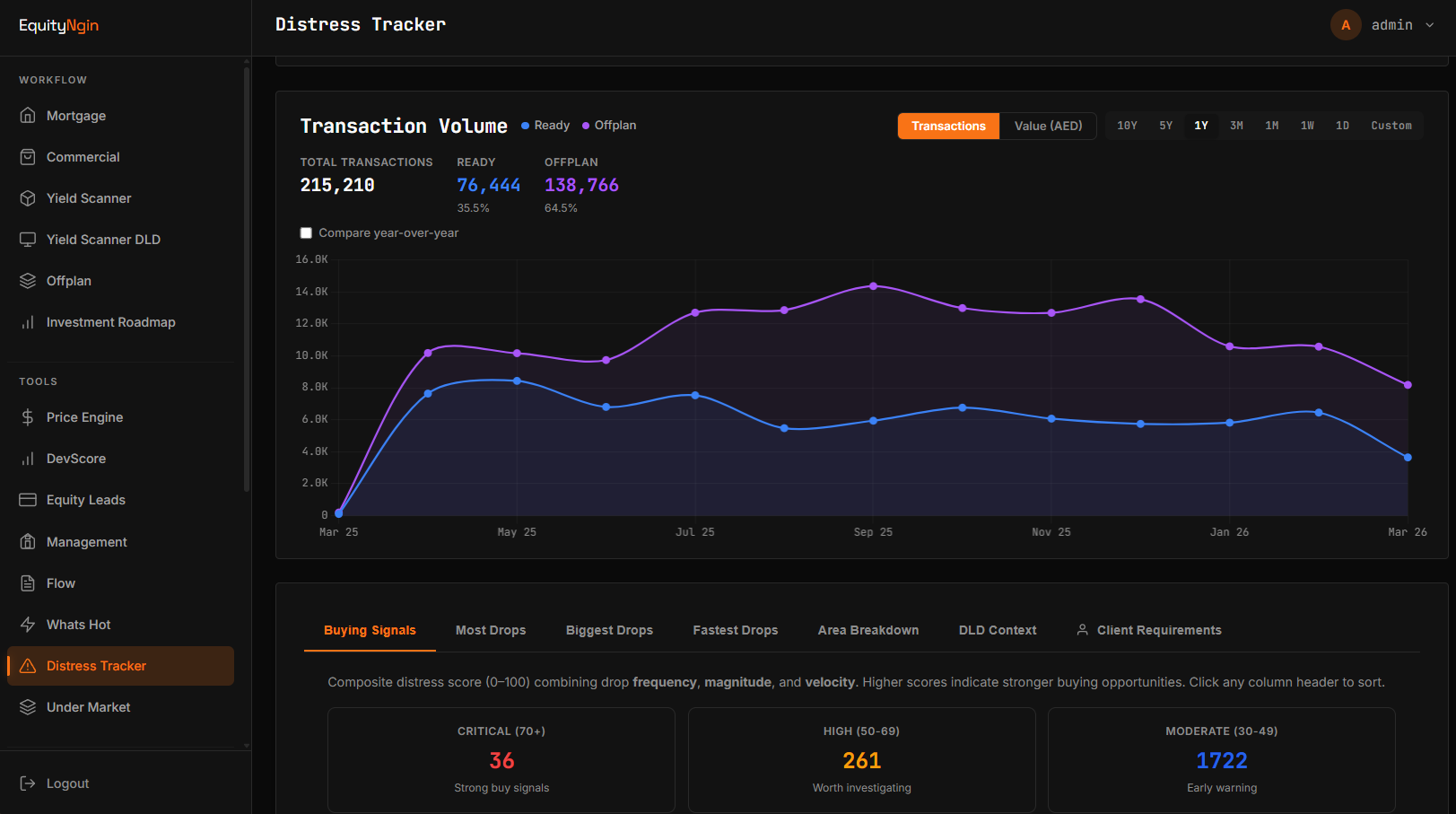
14 analytical modules tracking every property transaction, listing, and rental contract in Dubai. Built from scratch with custom scrapers, a three agent AI newsroom, and hallucination detection that catches errors before humans see them. The client went from Excel spreadsheets to a Bloomberg terminal for property.
Firswood Properties
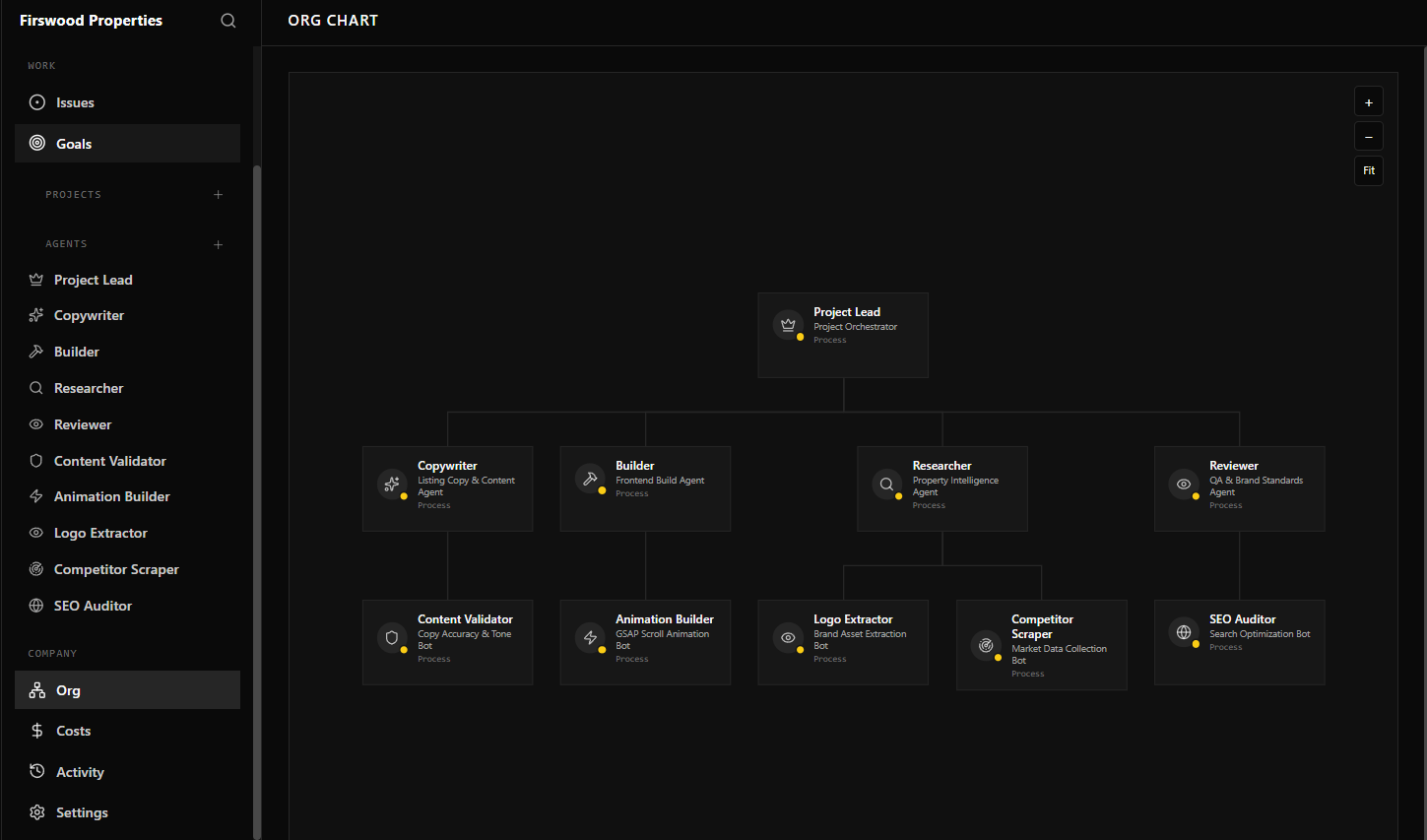
A property company drowning in manual marketing work. Built them a system where AI workers write property descriptions, create area guides, schedule social media posts, and capture leads 24/7. The listings actually sound like they were written by someone who gives a damn, not the usual "stunning apartment in prime location" copy that every agent in Dubai pastes from the same template.
Get Chatty
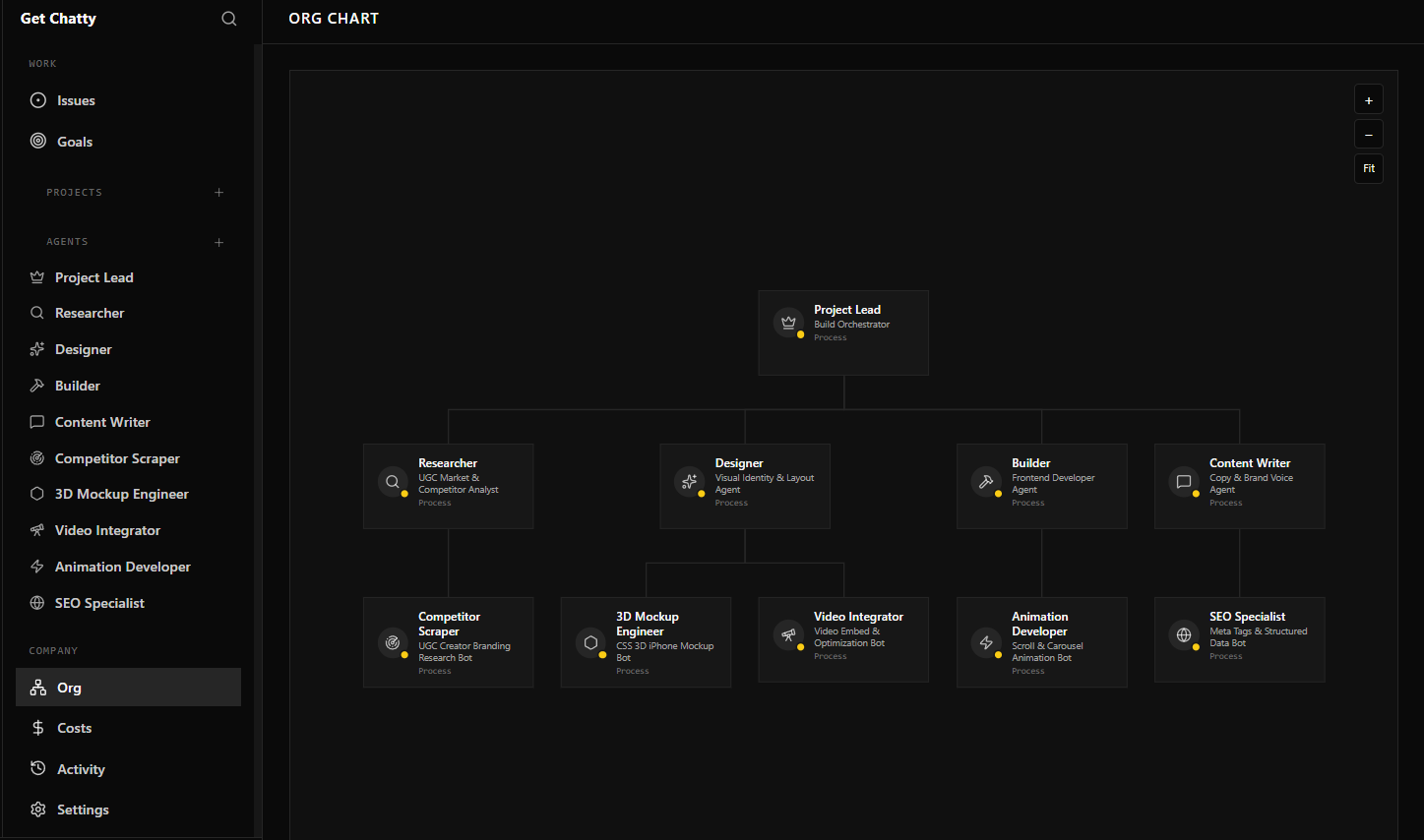
Client was great at posting on socials but their website looked like it hadn't been touched since 2019. Built a system that watches their social accounts and automatically generates fresh web content whenever they post. New Instagram reel about a product? The website has a dedicated page for it within hours. No CMS login. No manual uploads. No "I forgot to update the website again." It just works.
MortgageCompare.ae
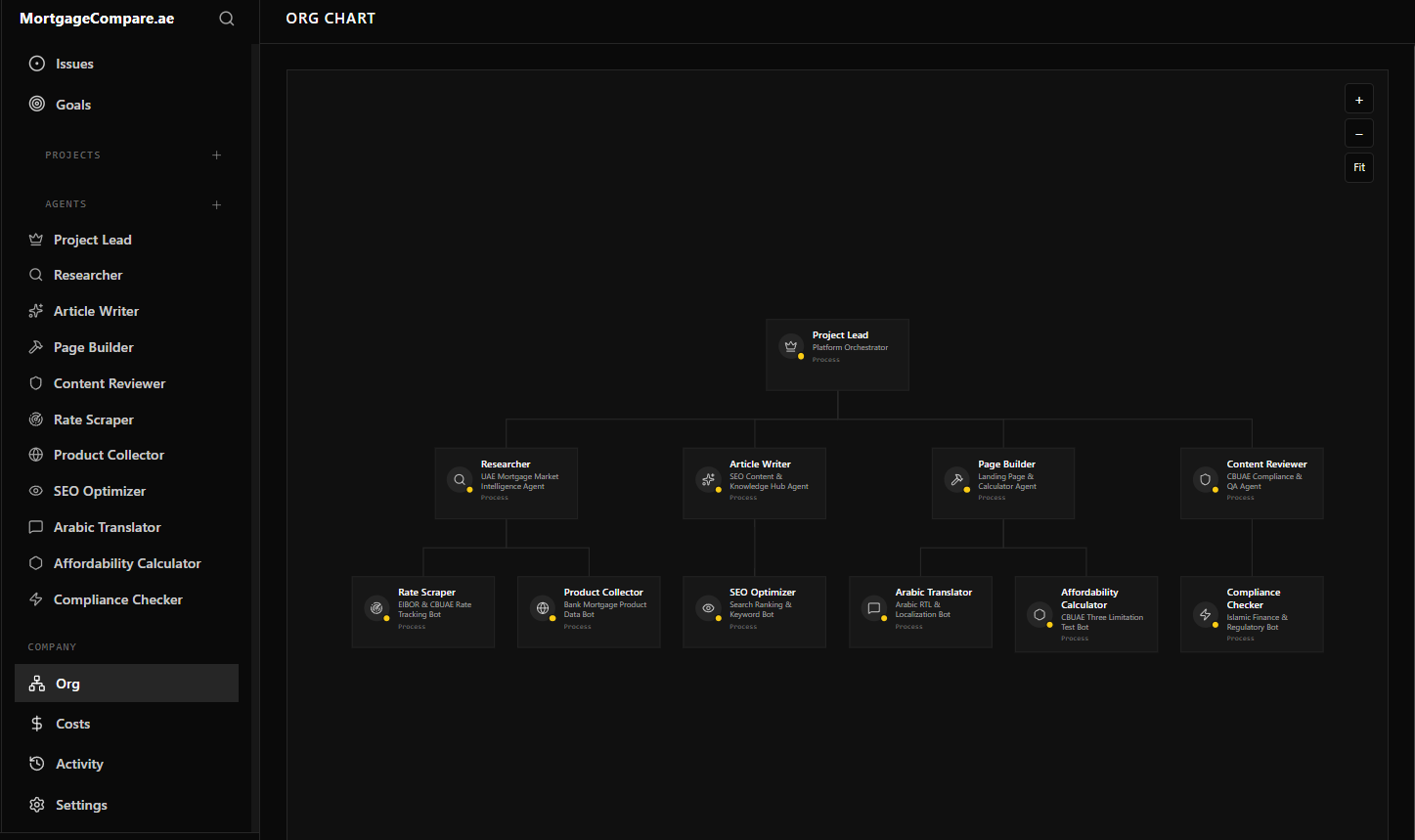
A mortgage comparison site with 4 autonomous AI workers built into the codebase. One researches the market. One writes articles. One builds the pages. One reviews everything before it goes live. The site generates its own content, manages its own SEO, and the owner hasn't touched it in weeks.
In production for
The human behind the machine
8 years writing code. More than a decade running businesses across retail, property, and tech. I've been on both sides of the freelancer conversation enough times to know what goes wrong and why.
I built my first AI assistant for myself because I was tired of doing repetitive work. Then a client saw it and said "build me one of those but bigger." So I built an entire AI workforce platform. Then another client said "now put that inside a website." So I built living websites.
Dean & Machine is what happens when one person who understands both business and engineering decides to stop building tools and start building replacements.
What clients actually say
"We used to spend two days a week updating our website content. Now it does it itself. Gareth didn't just build us a website, he made our marketing department redundant. Thankfully, we didn't have one."
Client, Property Sector // Dubai
"I asked for a dashboard. He built an autonomous research team that feeds the dashboard, writes the analysis, and sends me a summary every morning before I've finished my coffee. I didn't ask for that. Glad he did it anyway."
Client, Financial Services // UAE
Names withheld. These are real people who probably don't want recruiters calling them.
What happens next
Either way, let's talk. 15 minutes. No pitch deck. No "circling back." Just a conversation about whether your business needs what I build.
Living websites
Most websites are digital tombstones. Built once, forgotten immediately, slowly rotting while the owner assumes it's doing something. It's not. It's sitting there like a storefront with the lights off. Ours come with a built in marketing department that never clocks out.
Watch it work
What's built into every site
Researcher
Scans Google rankings at 6am every day while your competitors are still asleep. Finds the content gaps they left wide open and writes a brief so specific the content writer barely needs to think. Your SEO consultant charges $2,000/month to do this once a quarter. This one does it before breakfast. Every day. Including Christmas.
Content Writer
Takes the researcher's brief and writes optimised, on brand content. Not the kind of AI content that reads like a blender ate a thesaurus. Real articles with structure, personality, and the kind of expertise that makes readers think an actual human spent hours on it. They didn't. But they'll never know.
SEO Analyst
Reviews every article for keyword placement, schema markup, internal linking, and header structure. If something isn't going to rank, it sends it back with specific feedback. Think of it as the world's most pedantic editor, except it's right 97% of the time and never sulks when you disagree with it.
Social Manager
Takes published content and distributes it across LinkedIn, X, and wherever your audience lives. Writes posts that sound like a human with opinions, not a corporate social media calendar designed by a committee of people who've never actually used the internet for fun.
Lead Gen Agent
Visitors land on your site and think they're just reading an article. They are. They're also being profiled, scored, and queued for follow up. The article was bait. Good bait, but bait. By the time they fill in a form, the agent already knows what they want, what they can afford, and how urgently they need it.
Marketing Director
Sits above the other five workers and reviews all output before it goes live. Checks brand alignment, quality standards, and strategic fit. If the content writer gets a bit too creative or the SEO analyst gets a bit too keyword happy, this is the adult in the room. Nothing reaches your audience that the director hasn't signed off on first. Like a real marketing director, except it has zero interest in attending your leadership offsite.
▼ Want to know how this actually works? Click here.
Technical specification for the living websites platform. Not for the faint of stack.
TECHNICAL SPECIFICATION
Living Websites Platform
v2.4 / March 2026 / Production
Architecture: Event Driven
Author: Gareth Dean
Content Generation Pipeline
Research Agent
Scrapes Google Trends, competitor blogs, and industry news feeds every 6 hours. Uses GPT 4o to identify content gaps and keyword opportunities your site isn't covering. Outputs a ranked content brief with target keywords, search intent classification, and recommended word count.
Content Writer
Fine tuned on your brand guidelines, tone of voice, and existing content. Generates drafts with proper header hierarchy, internal linking suggestions, and schema markup. Supports long form articles, area guides, product descriptions, and FAQ sections. Output passes through a plagiarism check before SEO review.
SEO Review Layer
Automated audit on every piece before publication. Checks keyword density, readability score, meta description length, image alt tags, internal link ratio, and schema validity. Produces a pass/fail score. Failed content goes back to the writer with specific feedback. No human intervention required.
Distribution & Analytics
Social Distribution
Published content is automatically repurposed for LinkedIn, X, and Instagram. Each platform gets a tailored version: long form excerpt for LinkedIn, punchy thread for X, visual card for Instagram. Scheduling is based on historical engagement data per platform. Posts are queued, not blasted.
Lead Capture & Scoring
Behavioral tracking captures scroll depth, time on page, return visits, and content affinity. Lead scoring model assigns a temperature rating (cold/warm/hot) based on engagement patterns. Hot leads trigger immediate notification via Slack or email. All GDPR compliant with consent management built in.
Infrastructure
Frontend
Next.js 14 / Tailwind CSS
SSG + ISR for speed + freshness
CMS
Headless (Sanity / custom)
API first, no WordPress
Hosting
Vercel edge network
Global CDN, auto SSL
AI Orchestration
Python / FastAPI
Custom agent loop, not LangChain
This is the overview. The full technical spec is 40+ pages and is shared with you at the end of the build.
The human behind the machine
I got tired of building websites that needed a human babysitter. Updating content, chasing rankings, scheduling social posts, following up on leads. All of that is repetitive work that follows patterns. Patterns are what machines do best.
8 years of building web applications and more than a decade running businesses taught me what matters: websites that generate revenue, not just look pretty. Every living website I build comes with the same question baked in: will this make money while the owner sleeps? If the answer isn't yes, we redesign until it is.
Full stack development, AI orchestration, SEO systems, and content automation. That's the toolkit. No WordPress themes. No drag-and-drop builders. Code, agents, and architecture built from scratch.
What happens next
15 minutes. I'll show you what a living website looks like for your business. No pitch deck. Just a screen share and a straight answer.
Humanless companies
CEO, department heads, workers. Budgets, approvals, performance reviews. Everything a real company has except the moaning, the sick days, and the passive aggressive emails about who took the last coffee pod.
The org chart
Pick your level
Not every business needs a full AI workforce on day one. Start where you're comfortable. Scale when you're ready. There's no wrong entry point.
The AI handles the boring bits. You keep the steering wheel.
Perfect for businesses that want to dip a toe in without jumping off the deep end. AI takes over the repetitive tasks: drafting emails, writing first versions of content, sorting data, scheduling posts. You review everything before it goes anywhere. Think of it as a very competent intern who never asks what the WiFi password is, never disappears for 45 minute coffee breaks, and doesn't need you to explain the same thing three times.
AI runs complete workflows. You check in when you feel like it.
The AI owns entire processes end to end. It writes the content, optimises it, publishes it, and posts it to social. It handles incoming leads, qualifies them, and books them into your calendar. You get a summary at the end of the day showing what happened. Like having a property manager who handles the tenants so you don't have to. Except this one also handles the marketing, the accounting, and the client follow ups. And it doesn't take 15% commission.
AI runs departments. You handle the exceptions.
Entire departments run by AI. Marketing, sales, operations, support. The agents have budgets, approval chains, and quality gates. They handle 95% of the work without you knowing. You get alerted when something needs a human decision: a big client request, a budget threshold, a strategic pivot. Everything else just happens. You'll start checking the dashboard less and less. Eventually you'll forget to check it at all. That's when you know it's working.
AI runs the company. Builds new workers when it spots gaps. You set the strategy.
The machine identifies opportunities, creates new AI workers to fill them, manages its own budget, and reports to you weekly with a summary of decisions made, revenue generated, and plans for next week. You're the board of directors. The AI is everything else. Some clients find this unsettling at first. Then they check their revenue numbers and get over it remarkably quickly.
Buy what you need
You don't have to go all in on day one. Need an AI content writer? Buy one. Want the whole marketing department automated? Done. Ready to hand over the keys to the entire operation? We can do that too. You decide how far to go.
Content writer, SEO analyst, social media manager, email marketer, brand strategist. Five workers that research your market, write your content, optimise it for search, post it everywhere, and make sure it all sounds like you. Not like a robot pretending to be you.
Or just pick the one worker you need most.
Customer support, QA reviewer, ops manager, SDR. These workers handle the daily grind: answering enquiries, qualifying leads, booking meetings, checking quality, and flagging problems before they become expensive. Your operations run 24/7 with zero overtime.
Start with support. Scale to the full team.
Finance analyst, forecasting agent, budget tracker. They watch your cash flow, flag anomalies, generate P&L summaries, and build forecasts that are based on real data instead of whatever your accountant felt like guessing this quarter. Reports land in your inbox before you've finished breakfast.
Just the analyst, or the whole finance desk.
Data analyst, competitor intelligence, system monitor. They scrape your market, watch your competitors, track your performance metrics, and alert you when something changes. If a rival drops their prices at midnight, you'll know before your morning alarm goes off.
One agent watching the market, or a full tech team.
Not sure where to start?
Most clients start with marketing. One writer, one SEO analyst. They see the output, get addicted, and come back for the rest. You'll probably do the same.
The maths
Plus one of them will quit in 6 months and you do it all over again.
Nobody quits. Nobody calls in sick. Nobody has opinions about the office playlist.
▼ How do you actually replace an entire department? Click here.
Technical specification for the humanless company framework. Warning: your HR team might not love this.
TECHNICAL SPECIFICATION
Humanless Company Framework
v3.1 / March 2026 / Production
Architecture: Multi Agent Orchestration
Author: Gareth Dean
Agent Hierarchy
CEO Agent
Receives business objectives and breaks them into department level tasks. Monitors cross department dependencies. Escalates exceptions to the human owner based on configurable thresholds. Has read access to all department outputs but can only delegate, not execute.
Department Heads
Each department (Marketing, Finance, Operations, Support) has a head agent that manages its own worker pool. Receives tasks from the CEO, decomposes them into sub tasks, assigns to workers, reviews output, and reports completion. Maintains department level context and KPIs.
Worker Agents
Specialized agents with narrow tool access. A content writer can only write and submit for review. An analyst can only read data and produce reports. Strict role boundaries prevent scope creep. Each worker logs every action to an immutable audit trail.
Communication & State
Message Bus
Agents communicate via structured JSON messages through a central bus. Each message includes sender, recipient, task ID, priority, and payload. Messages are persisted in PostgreSQL with full search. You can replay any decision chain from start to finish. Think email, but nobody writes "per my last message."
Human in the Loop
Four configurable levels. Level 1: full autonomy. Level 2: daily digest. Level 3: approval required above a cost or risk threshold. Level 4: human approves every output. Most clients start at Level 3 and move to Level 1 within 60 days once they realize the agents make fewer mistakes than the humans did.
Security & Compliance
Data Isolation
Each client's agent pool runs in an isolated environment. No cross contamination of data, models, or context between clients.
Audit Trail
Every agent action is logged with timestamp, input, output, and reasoning. Full compliance audit available on request. Nothing disappears.
Encryption
AES 256 at rest, TLS 1.3 in transit. Secrets managed via environment variables with automatic rotation. No hardcoded credentials.
This is the overview. The full technical spec is 40+ pages and is shared with you at the end of the build.
The human behind the machine
I didn't start by building AI companies. I spent more than a decade running them first. Retail, property, tech. I know what payroll looks like when half your team is doing work a script could handle.
My background in business operations, management structures, and process engineering is what makes the AI workforce designs work. You can't replace a department if you don't understand what the department actually does. Not the job descriptions, the real work. The workarounds, the bottlenecks, the things that only one person knows how to do.
What happens next
15 minutes. We'll work out which level of automation makes sense and what the first phase looks like. Bring your org chart. I'll show you what it looks like without the humans.
Smart data
It's buried in spreadsheets called 'Final_v3_ACTUAL_USE_THIS_ONE.xlsx', scattered across five platforms nobody agreed on, and understood by exactly one person in your company who also happens to be the one threatening to leave. We build systems that dig it out, clean it up, think about it, and hand you decisions on a silver platter.
Watch it work
What we build
If it has a URL, we can scrape it. Government portals, competitor sites, PDFs that were clearly designed by someone who actively hates the concept of data extraction. We've built scrapers for all of them. Some of them run every 15 minutes. None of them ask for overtime. And unlike your last data entry hire, they don't accidentally paste column B into column D and then blame Excel.
Raw data goes in. Intelligence comes out. Sentiment analysis, entity extraction, anomaly detection, price prediction, market classification. The AI layer turns a spreadsheet of numbers into a system that tells you what to do next. Your analyst takes three days to produce a chart. This does it in three seconds and doesn't need you to explain what a pivot table is.
Not Tableau. Not Looker. Not any off the shelf tool that makes you compromise your requirements to fit their templates. Bespoke interfaces designed around how you actually think and make decisions. Built in Next.js with real time updates. The kind of dashboard that makes your investors think you spent six figures on it. You didn't.
Daily, weekly, monthly. PDF reports generated automatically with AI commentary that explains what happened and why it matters. Not a dump of charts that nobody reads. Actual written analysis by AI agents trained on your industry, delivered to your inbox before your morning coffee. Your last analyst spent two days building a report that was out of date by the time they finished formatting it. These arrive before sunrise.
▼ How does the data pipeline actually work? Click here.
Technical specification for the smart data platform. Spoiler: it's not a spreadsheet.
TECHNICAL SPECIFICATION
Smart Data Platform
v3.2 / March 2026 / Production
Architecture: Pipeline + Dashboard
Author: Gareth Dean
Data Pipeline Flow
Data Sources
APIs, Portals, PDFs, Feeds
Scrapers
WAF bypass, rate limiting, retry
AI Layer
Classify, extract, score, predict
Quality Gate
Anomaly detection, fact check
Dashboard
Real time API + Next.js UI
Scraper Architecture
Extraction Engine
Python with Playwright for JavaScript rendered pages, httpx for APIs, pdfplumber for document extraction. Each scraper runs on a schedule (every 15 minutes to once daily). Automatic retry with exponential backoff. WAF detection and proxy rotation when needed.
AI Enrichment
Raw data passes through GPT 4o for entity extraction, sentiment analysis, and classification. Price anomalies flagged automatically. Market trends identified across time series data. Every AI output is validated against source data before storage.
Quality Gate
Multi stage validation: schema validation, range checks, cross source verification, anomaly detection. Data that fails quality checks gets quarantined, not published. You never see bad data. The system catches it before you even know it existed.
Dashboard & Delivery
Frontend
Next.js 14 with real time data via WebSocket connections. Charts built with Recharts. Map visualizations with Mapbox GL. Responsive design, works on mobile. Sub 200ms load times with ISR and edge caching. Looks like Bloomberg. Costs like a startup.
Automated Reports
AI agents generate daily/weekly/monthly PDF reports with written analysis. Not chart dumps. Actual commentary explaining what changed, why it matters, and what to watch next. Reports are versioned, searchable, and delivered to your inbox before your first meeting of the day.
This is the overview. The full technical spec is 40+ pages and is shared with you at the end of the build.
The human behind the machine
8 years building data systems: scrapers that run every 15 minutes, ETL pipelines that clean millions of rows overnight, AI enrichment layers that turn raw numbers into decisions. Before that, I spent a decade making business decisions with bad data and gut feelings. I know what it costs to guess when you could know.
Python for extraction and processing. PostgreSQL and Supabase for storage. Next.js for dashboards that load in under 200ms. GPT-4o for the intelligence layer that makes raw data actually useful. The full pipeline, from source to dashboard, built as one integrated system. Not stitched together from five SaaS tools that don't talk to each other.
If your data still lives in spreadsheets that someone updates on Thursdays, we should talk.
What happens next
15 minutes. Tell me what data you have, where it lives, and what decisions you wish it could make for you. I'll tell you exactly what we'd build.
Client work
Four projects. Each one solved a real problem for a real business. No templates. No page builders. No shortcuts. Click any case study to read the full breakdown of how it was built and why it works.
A property analytics company running their entire operation on Excel spreadsheets and manual data entry. Every morning someone spent three hours copying numbers from government portals. We replaced the entire workflow with a 14-module intelligence platform processing 1.7 million transactions.
The client ran a property analytics consultancy in Dubai. Their intelligence operation was a collection of Excel spreadsheets, manual data entry, and institutional knowledge locked inside the heads of senior analysts who occasionally went on holiday. Every morning, someone spent three hours copying transaction data from the Dubai Land Department portal into a spreadsheet that crashed if you looked at it funny. Rental yield calculations were done by hand. Developer track records were assessed by memory. Market commentary was whatever the senior analyst could recall from the previous week, typed into an email at 7am and sent to clients before anyone had double-checked the numbers.
The problems were compounding. Clients were paying for intelligence that was, at best, 48 hours stale. At worst, it was wrong. A single fat-finger error in a spreadsheet formula had once sent the wrong yield figures to 30 clients. Nobody noticed for two days. The company was growing, but the infrastructure was held together with duct tape, caffeine, and the quiet terror of knowing that one sick day from the right person could bring the whole operation to a halt.
They needed a system that could ingest every property transaction in Dubai, process it in real time, layer analytical models on top, and serve the results through dashboards clean enough that clients would pay for access. They also needed it yesterday.
We built EquityNgin from the ground up. 168,000 lines of code across 319 Python files and 99 HTML templates. Fourteen analytical modules, each one solving a specific problem that used to require a human analyst and a prayer. The system is a Flask application with 11 registered blueprints, 40+ API routes, and a subscription gating system with five plan tiers. It runs on Render with persistent storage, PostgreSQL for auth, SQLite for module-local data, and a scraper pipeline that pulls fresh listing data from PropertyFinder every night using Playwright to bypass WAF protection.
The core intelligence layer sits on top of the Dubai Land Department's complete transaction dataset: 1.7 million property transactions going back over a decade. Every sale, every rental contract, every offplan purchase. The system cross-references this with 128,000+ active property listings, service charge data, building handover dates, developer track records, and valuation benchmarks. When a client asks "what's happening in JVC right now?", the system doesn't guess. It queries 15 years of verified transaction data and gives an answer with sources.
Each of the 14 modules handles a different slice of the intelligence puzzle. EquityIQ identifies commercial refinancing opportunities by modelling loan-to-value ratios against current market values. DistressIQ tracks price drops across the entire market and scores buying opportunities on a composite index of frequency, magnitude, and velocity. It found 36 critical-level distress signals and 261 high-level opportunities in one scan. DevScoreIQ grades every developer in Dubai on delivery track record, capital appreciation, and project completion rates. MortgageIQ runs a multi-path mortgage calculator with fact-find wizards covering personal, buy-to-rent, and commercial scenarios. PortfolioIQ gives property investors a live dashboard of their holdings with ROI tracking, comparable analysis, and automated LLM-powered market commentary.
Then there is the pricing engine. It reconstructs yearly price time-series for every area and project in Dubai, calculates compound annual growth rates across 3, 5, 10, and 20-year horizons, and runs cycle position analysis to flag whether a market is expanding or contracting. The offplan engine scores new developments against historical price-per-square-foot benchmarks. TransactionsIQ lets users search the full DLD and Ejari dataset with fuzzy matching on area names, bedroom counts, and unit sizes. WhatsHotIQ generates a Daily Market Pulse PDF report that goes out every morning. The system has been publishing these daily since March 2026, with zero missed days.
On the AI side, PortfolioIQ includes a three-agent newsroom powered by a provider abstraction layer supporting OpenAI, Anthropic, Groq, and Ollama. One agent researches, one writes, one fact-checks. The newsroom generates client-facing market commentary with number-lock precision to prevent hallucinated statistics. Every figure in a report maps back to a verified data source.
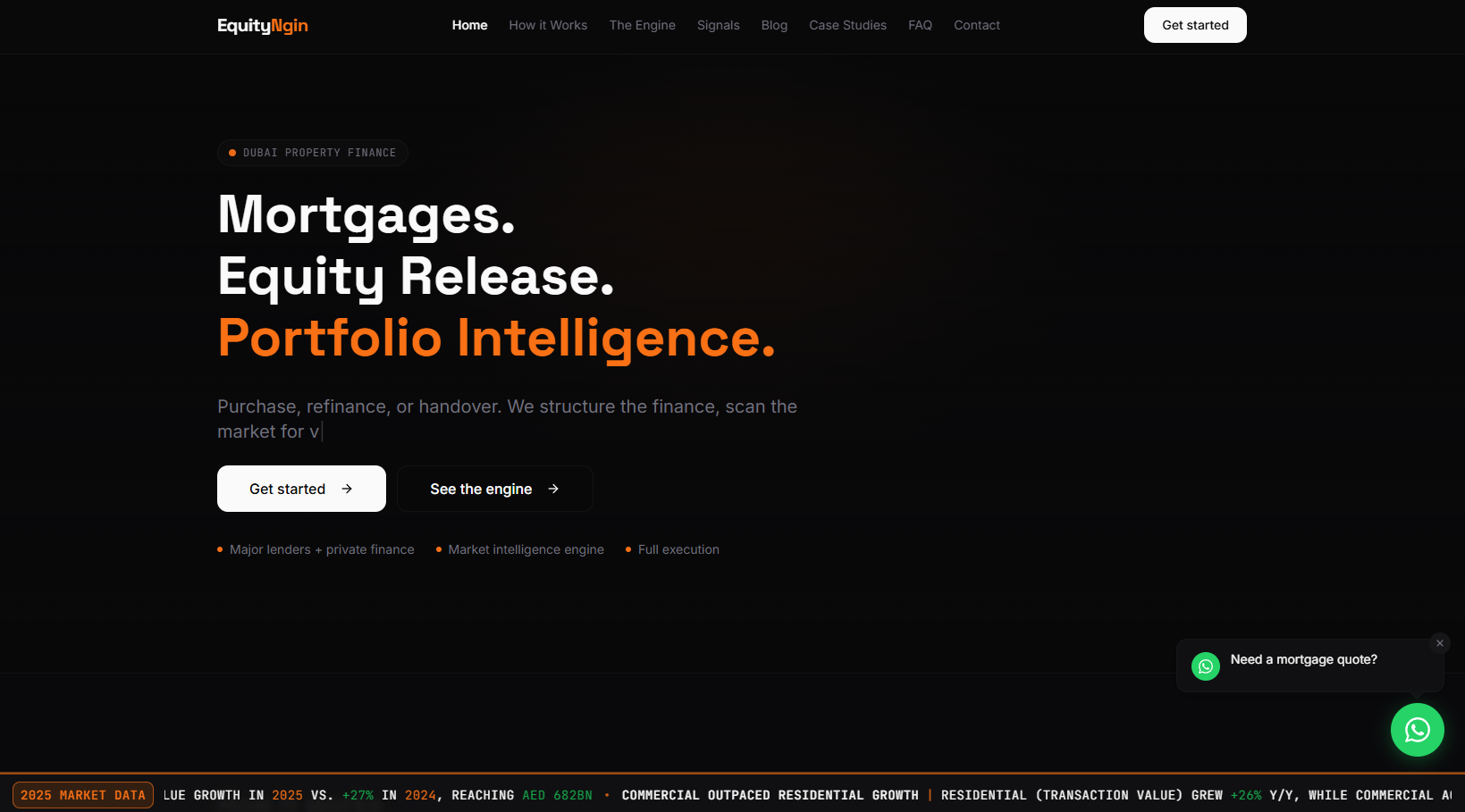
The client went from Excel spreadsheets to what they describe as "a Bloomberg terminal for Dubai property." Fourteen modules running in production. Daily market pulse reports publishing automatically every morning. Scrapers refreshing listing data every night. Dashboards updating in real time. The senior analyst who used to spend three hours on data entry now spends that time actually analysing data and talking to clients. The company has not manually entered a data point since the system went live.
The subscription model generated revenue from day one. Five plan tiers from trial to enterprise. Stripe integration handles billing. The admin panel tracks user activity, manages company accounts, and flags suspicious session behaviour. The system processes 2.7 gigabytes of source data across DLD transactions, Ejari rental contracts, developer databases, and building registries. All of it queryable in seconds.
The UAE mortgage market had no transparent comparison tool. Buyers called five brokers, got five different stories. We built a platform with 55+ products from 12+ banks, CBUAE-compliant calculators, and four AI agents that research, write, build, and review content autonomously.
The UAE mortgage market in 2026 is one of the most complex in the region. Five different borrower types: Emirati nationals, employed expats, self-employed professionals, non-residents, and expats leaving the country. Each one has different loan-to-value limits, debt burden ratio caps, and income multiplier rules, all governed by the Central Bank of the UAE. Islamic finance adds another layer of complexity with Ijara, Murabaha, and diminishing Musharaka structures. Conventional products have their own rate structures pegged to EIBOR.
Before this site existed, a first-time buyer in Dubai had to call five different mortgage brokers to get five different stories about what they could afford. Brokers have financial incentives to steer borrowers toward products that pay the highest commissions, not the ones with the best terms. Rate information was scattered across bank websites, half of which were out of date. Nobody tracked EIBOR movements in real time or explained what a 25 basis point shift meant for a 2 million AED property purchase. The market needed a CompareTheMarket for UAE mortgages, and nobody had built one.
A full mortgage comparison platform at mortgagecompare.ae. The front end is a hand-coded static site with no framework overhead. No React, no Next.js, no build step. Just clean HTML, CSS, and a JavaScript calculation engine that implements the actual three-test affordability model UAE banks use: maximum LTV by nationality and property value tier, maximum debt burden ratio by borrower type, and maximum income multiple by residency status. The engine handles Emirati-specific rules (80% LTV on first home under 5M AED), expat rules (75% LTV on second home), and non-resident rules (50% LTV across the board) because getting these wrong means telling someone they can afford a property they cannot buy.
The product database tracks 55+ mortgage products from 12+ banks with daily rate updates. Both Islamic and conventional. The site displays a live rate ticker at the top of every page: CBUAE base rate, EIBOR 3M, best Islamic rate, best conventional rate, product count, and last update date. All real data, not estimates. There is a full EIBOR tracker page showing rate history and explaining what each movement means for existing mortgage holders.
Five persona-specific landing pages target each borrower type with personalised eligibility criteria, document requirements, and regulatory context. The knowledge hub contains deep guides on topics like EIBOR explained, Islamic vs conventional mortgages, rent vs buy analysis, first-time buyer guides, and expat mortgage specifics. Each page has full Schema.org markup: HowTo, FAQPage, FinancialService, and WebSite schemas for search visibility.
The real innovation is the agent workflow baked into the codebase. Four AI agents operate in a structured pipeline. The researcher agent analyses Google rankings, identifies content gaps, and builds keyword-targeted briefs. The writer agent generates articles using the brand voice, regulatory knowledge, and domain expertise. The builder agent constructs new pages from design templates with proper SEO structure, internal linking, and responsive layouts. The reviewer agent audits everything before publication: keyword density, readability scores, schema validity, image optimization, and CBUAE compliance. Nothing goes live without passing all four gates.
The calculator itself uses the standard PMT amortization formula with proper rate conversion from annual to monthly, and displays results with AED formatting, comma separation, and two decimal places for rates. It factors in DLD fees (4% + AED 580), mortgage registration fees (0.25% + AED 290), and valuation costs. These are the numbers that matter when someone is deciding whether they can actually afford a property.

The site generates its own content, updates its own rates, manages its own SEO, and the owner has not touched it in weeks. The knowledge hub fills itself. The guides write themselves. The rate data refreshes daily. Four AI agents working in a pipeline, no human intervention. It is a living website in the truest sense.
The site launched with bilingual support (English and Arabic), full CBUAE regulatory compliance baked into every calculator, and conversion tracking measuring everything from scroll depth to form abandonment. The builder made a strategic decision to go framework-free. No React hydration overhead, no JavaScript bundle to download, no build pipeline to break. The result is a site that loads in under a second, scores well on Lighthouse, and works on every device including the low-end Android phones that half the UAE's expat population carries.
A UGC creator pulling 2 million views a month with 17 brand partnerships but a website that looked abandoned. We built a portfolio with 3D CSS phone mockups, video showcases, and a system that auto-generates pages whenever new social content drops.
Corey is one of Dubai's most active UGC creators. Two million views a month across platforms. Seventeen brand partnerships with companies like Sticky Golf, Oxepure, Zenfy, and Binghatti. The Instagram was on fire. The TikTok was on fire. The website looked like it had been abandoned sometime in 2022.
This is a pattern we see constantly in the creator economy. The people who are best at making content are worst at maintaining websites. It makes sense. Video production is immediate, visual, and dopamine-driven. Website maintenance is administrative, invisible, and boring. So the website rots. And when a potential brand partner Googles the creator's name, lands on a stale site with no recent work, and concludes they are either inactive or unprofessional, that is revenue walking out the door that the creator never even knew about.
Corey needed a portfolio that looked premium, showcased video content in a format brands could browse quickly, and stayed current without any manual intervention. The last point was non-negotiable. Any solution that required logging into a CMS was guaranteed to fail within the first month.
A dark-themed portfolio site built from scratch with no framework. Pure HTML, CSS, and JavaScript. The design centres on 3D CSS phone mockups that display video case studies. Each mockup is a full iPhone recreation using CSS transforms: the frame, the notch, the home indicator bar, and the screen cutout. Videos sit inside these mockups and play on interaction, giving brands an instant sense of how the content looks on the platform where their audience actually sees it.
The hero section leads with the positioning: "UAE's most conversational content creator." Then immediately into three phone mockups showing street interviews, golf brand ads, and food brand content. Below that, eight detailed case studies organised by brand partnership, each with engagement metrics and content samples. The typography uses Playfair Display for headlines, Inter for body copy, and IBM Plex Mono for technical details. The colour palette is dark navy with cyan accents, chosen because it makes video thumbnails pop without competing with them.
Video files are distributed across five Surge.sh CDN subdomains to parallelise downloads and avoid single-domain connection limits. Each video uses preload="metadata" to keep initial page load fast while ensuring thumbnails render immediately. The site includes sections for portfolio, about, services, results, and packages, giving brands everything they need to make a decision without a phone call.
The self-updating mechanism watches Corey's social accounts for new content. When a new brand collaboration drops on Instagram, the system auto-generates a showcase page for it on the website. No form to fill in, no image to upload, no text to write. The video gets pulled, the brand name gets extracted, the engagement stats get tracked, and a new page appears. The portfolio stays current because the system does the maintenance work that Corey was never going to do manually.
Performance was a priority. No React, no Vue, no build tools. The entire site is static HTML served from a CDN. Phone mockups use pure CSS transforms instead of JavaScript libraries. Video lazy loading prevents bandwidth waste on content below the fold. The result loads fast on the budget Android phones common in the UAE market and the iPhones common among brand managers making purchasing decisions.

Corey has not logged into a CMS once since launch. The website is always current, always showing the latest work, and brands can see exactly what they are getting before making contact. The 3D phone mockups turned out to be the detail that brand managers remember. Multiple partnership enquiries have mentioned the website specifically as the thing that convinced them to reach out. It looks expensive. It was not. But nobody needs to know that.
The portfolio now auto-updates with new content drops. Stats refresh from live data. The design scales from 320px mobile to 4K desktop without a single breakpoint looking wrong. Zero ongoing maintenance cost. Zero ongoing time investment from the creator. The website does its job and stays out of the way.
A property advisory firm whose website looked like 2018 and whose marketing was the owner posting on Instagram when he remembered. We built a premium website with four AI agents handling content, copywriting, SEO, and quality control. Plus ten design concepts for the client to choose from.
Firswood Properties is a data-driven real estate advisory firm in Dubai. Their positioning is institutional quality: transaction data backing every recommendation, yield analysis informing every decision, submarket intelligence guiding every strategy. The clients are C-suite investors and asset managers. People who expect premium.
The website did not reflect any of that. It looked like every other real estate website in Dubai, which is to say it looked generic, felt template-driven, and communicated nothing about the data-led methodology that actually differentiated the company. Every listing used the same "stunning apartment in prime location" copy because nobody had time to write anything better. Leads came through WhatsApp and got lost in the chat history. The marketing strategy was the owner posting on Instagram whenever he remembered, which was approximately twice a month.
The company needed a website that looked like it belonged to a firm managing institutional capital, not one selling studio apartments in JVC. It needed content that actually explained the methodology. It needed lead capture that worked while the team was in meetings. And it needed to maintain itself, because the team had better things to do than update web pages.
We started by creating ten complete design concepts. Not wireframes. Not mockups. Ten fully coded HTML pages with different visual directions: Midnight Prestige, Desert Sandstone, Ocean Horizon, Glass Tower, Editorial Noir, Emerald Reserve, Copper Concrete, Alpine White, Royal Burgundy, and Skyline Gradient. Each one a complete hero section with typography, colour palette, imagery, and CTA layout. The client could open each one in a browser and see exactly what their website would look like before committing to a direction. No Figma previews that look nothing like the final product. No "imagine this but with your colours." Real pages, in a real browser, at full resolution.
The winning concept was a dark, editorial aesthetic with copper accent colours and bold sans-serif typography. Dubai skyline imagery at low opacity as a background, letting the text dominate. Two CTAs on the hero: "Book a Consultation" in a filled copper button and "Our Methodology" in an outlined version. The design says "we manage serious money" without saying it. The kind of understated confidence that institutional investors respond to because they have seen enough flashy property websites to be suspicious of them.
Behind the design sits a four-agent AI workflow identical in structure to the MortgageCompare system. A researcher agent scrapes competitor properties and identifies market gaps. A copywriter agent rewrites every listing with personality and local area knowledge, trained on scraped data from agents who have actually been inside the buildings. A builder agent constructs new pages from the approved design template with GSAP scroll animations and responsive layouts. A reviewer agent runs QA checks against brand standards before anything goes live. Five specialised skill bots handle support tasks: logo extraction, SEO auditing, image optimisation, schema markup generation, and social preview testing.
The property descriptions coming out of this system sound like they were written by someone who understands both the building and the buyer. Because the copywriter agent was trained on transaction data (what sold, for how much, how quickly), area intelligence (school ratings, walkability scores, metro proximity), and competitor listings (what the market is saying about comparable properties). The result is copy that sells without sounding like it is selling, which is exactly what institutional clients want to read.
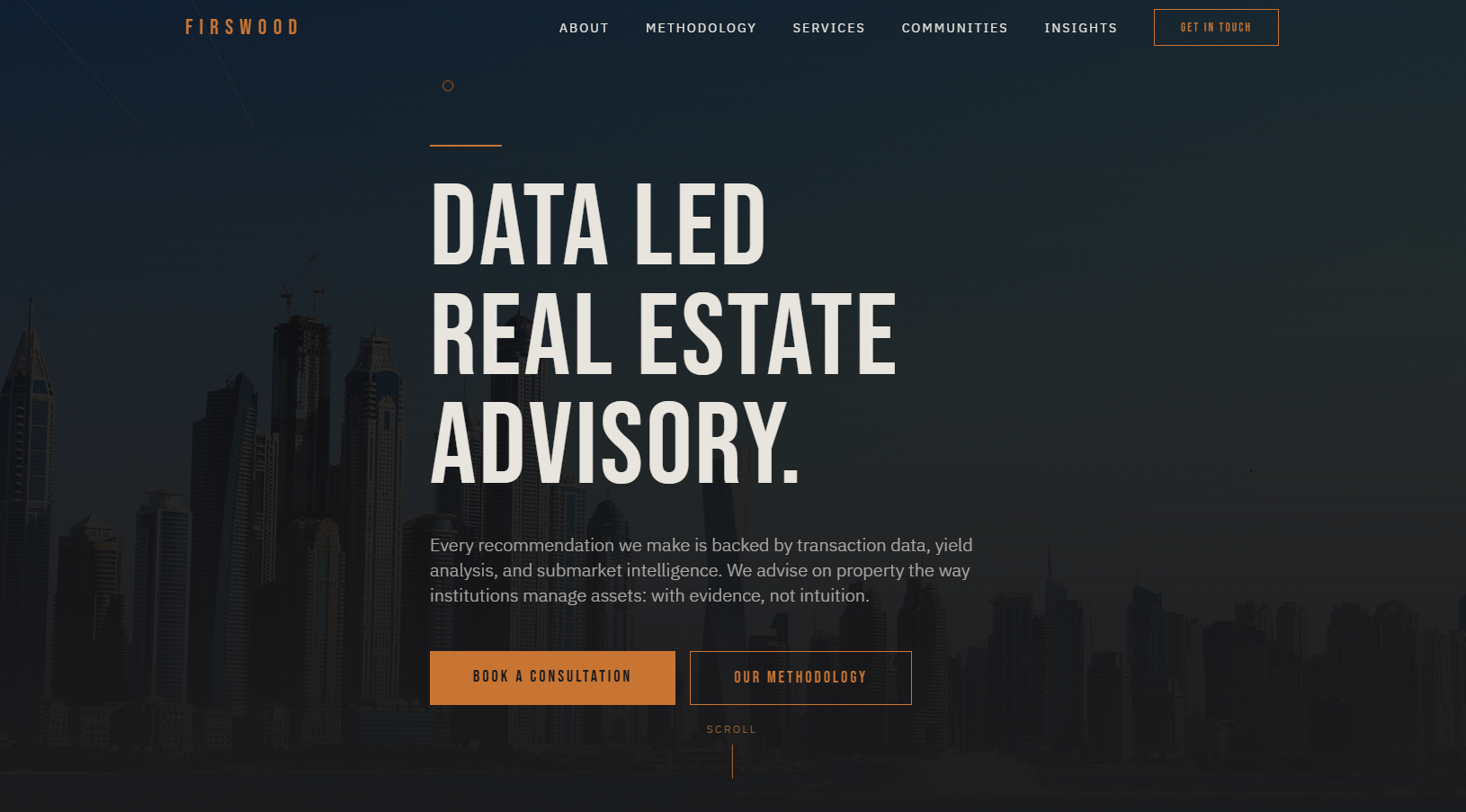
The owner now has a premium website that writes its own content, captures leads automatically, and looks like it cost five times what it did. The property descriptions sound like they were written by an expert who has visited the building, because the AI was trained on data from agents who have.
The ten-concept approach turned out to be one of the most effective parts of the engagement. Instead of weeks of design revisions based on subjective feedback, the client picked their favourite from ten real options in a single meeting. Total decision time: forty minutes. Compare that to the typical agency process of three rounds of revisions over six weeks while the designer quietly questions their career choices.
Lead capture runs 24/7. Content updates itself through the agent pipeline. SEO audits run automatically on every new page. The company went from a website that embarrassed them in investor meetings to one they actively show off. The data-led positioning is now reflected in every pixel, every word, and every interaction on the site.
What happens next
15 minutes. No pitch deck. Just tell me what your business does and I'll tell you what I'd build.
Pricing
Depends entirely on what you need. I know that's annoying. Let me explain why it's also honest.
THE $500 EXAMPLE
An AI worker that knows your brand guidelines, your tone of voice, your goals, and your target audience. It researches topics, writes long form content, passes it through an AI SEO reviewer, and publishes. You approve or you don't. That's it.
That costs around $500.
Not per month. That's the build cost. Once it exists, it runs. The only ongoing costs are the token fees for whichever AI model it uses, which for a single blog post is a tiny amount.
A blog writer is one AI worker doing one job. Some businesses need one worker. Others need twenty. Some need an entire department replaced.
A living website that writes its own content, manages its own SEO, captures leads, and distributes to social? That's more than one worker. That costs more than $500.
Replacing a team of 50 with an AI workforce that handles operations, customer service, reporting, and compliance? That's going to cost a lot more than $500. But it's going to cost a lot less than 50 salaries.
SINGLE WORKER
$500+
One AI worker, one job. Blog writer, social scheduler, data entry bot, report generator. Scoped, built, and running within a week.
Think: the task you keep putting off because it's boring.
SMALL TEAM
$2,000+
A few workers collaborating. A living website, a content pipeline, a lead scoring system. The kind of work that currently takes 2 or 3 people full time.
Think: the small team you can't afford to hire.
FULL DEPARTMENT
Let's talk.
Replacing or restructuring entire departments. Custom AI workforce architecture, phased rollout, ongoing support. This is the big stuff.
Think: the org chart rewrite your CEO keeps hinting at.
No two businesses are the same. The blog writer example gives you an idea of the cost per unit of work. But your business isn't a blog writer. Your business has processes, quirks, legacy systems, compliance requirements, and that one spreadsheet Karen built in 2019 that runs the entire back office.
My job is to understand the problem first. Then design the solution. Then price it. Putting a number on a page before I understand what you actually need would be irresponsible. I've hired enough freelancers who did that to know how it ends.
Small jobs won't cost much. Big jobs will. The 15 minute call exists so neither of us wastes the other's time.
Tell me what your business does. I'll tell you what I'd build, roughly what it'd cost, and whether it even makes sense. If it doesn't, I'll tell you that too.
Pick the one that sounds closest. If you're not sure, that's fine - pick "Not sure yet" and we'll figure it out together.
The more you share now, the more useful our 15 minutes will be.
All times are Dubai time (GMT+4). 30-minute call.
So I know who I'm talking to.
I'll send a calendar invite to your email. Here's what to expect: a 30-minute conversation about your business. No pitch deck. No slides. Just a conversation about whether what I build makes sense for you.